 |
 |
 |
|---|

 |
 |
|---|
 |
|
|---|---|
 |
 |
|
|
 |
|
|
|
 |
|
|
|
 |
|
|
|
 |
|
|
|
 |
|
|
|
 |
|
|
|
 |
 |
|---|
An In-Depth Exploration of Different Types of Ancestry DNA TestsIn recent years, the fascination with uncovering one's roots has burgeoned, leading to a burgeoning interest in ancestry DNA tests. This surge in curiosity has brought about a variety of tests, each with unique methodologies and insights to offer. Navigating this landscape can be overwhelming, so understanding the types of tests available is crucial for making an informed choice. Broadly, ancestry DNA tests can be categorized into three main types: autosomal DNA tests, Y-DNA tests, and mtDNA tests. Each of these offers distinct insights and benefits, depending on what aspect of your heritage you are most interested in exploring.
When considering an ancestry DNA test, it’s essential to contemplate what you hope to achieve. Are you eager to connect with living relatives, or is your interest more in understanding the deep, historical roots of your family? Each test offers different advantages and insights, so your personal goals should guide your choice. Moreover, it’s worth noting that while these tests can provide fascinating insights, they are not without limitations. Genetic data can offer clues, but it’s important to combine these findings with traditional genealogical research for a more comprehensive understanding. Additionally, privacy concerns are an important consideration. Sharing genetic data with companies requires a level of trust, and understanding how your data will be used and stored is crucial. In conclusion, ancestry DNA tests present an exciting opportunity to explore one's heritage, offering a bridge between the past and present. By choosing the right type of test and approaching the results with an informed mindset, individuals can embark on a journey that is as enlightening as it is personal. https://www.familytreedna.com/?srsltid=AfmBOopuIleMaxkUPPC9Tk4IlPcUb3HKRJJStIv4q9EBOL614rwLspBz
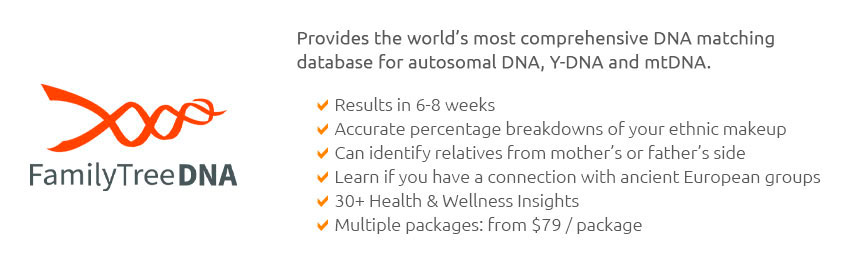
As the only company to offer three separate DNA databasesautosomal DNA (Family Finder), mtDNA, and Y-DNAFamilyTreeDNA is the only place to find the missing ... https://www.ucl.ac.uk/biosciences/gee/molecular-and-cultural-evolution-lab/genetic-ancestry-tests
The markers tested are of two types: STRs (short tandem repeats) and SNPs (single nucleotide polymorphisms). These markers have different mutation rates and so ... https://www.ancestry.com/c/dna-learning-hub/how-does-ancestrydna-test-differ-from-others
How is the AncestryDNA test different from other DNA tests? - 1. AncestryDNA is more comprehensive. - 2. The AncestryDNA test is gender neutral. - 3. AncestryDNA ...
|
|---|

